
How to Find Your Homeschool Style (Without Trying Every Method First)
Charlotte Mason, classical, unschooling, eclectic -- the options are endless. Here is how to figure out which approach actually fits your family without buying every curriculum on the market.
When I first started homeschooling, I spent three months reading about every single method I could find. Classical. Charlotte Mason. Unschooling. Waldorf. School at home. Unit studies. I made spreadsheets. I joined five Facebook groups. I took quizzes.
And then I bought a $400 boxed curriculum that my daughter hated by week two.
Here is what I wish someone had told me before I went down that rabbit hole: your homeschool style is not something you choose from a menu. It is something you discover by paying attention to your kid, your own energy, and what actually works in your real life.
That said, it helps to understand the landscape. So let me give you a quick, honest overview of the main approaches, and then we will talk about how to actually find your fit.
Charlotte Mason
Charlotte Mason was a British educator in the 1800s who believed children deserve a rich, living education. Her approach centers on "living books" (narrative, engaging books written by passionate authors, not dry textbooks), nature study, narration (where kids retell what they learned instead of filling in worksheets), short lessons, and lots of time outdoors.
Charlotte Mason works really well for families who love reading aloud, who want their kids to slow down and go deep instead of racing through facts, and who believe education should feel more like a feast than a grind. It can feel loose to parents who are used to traditional school structure, but there is more substance there than it first appears.
It tends to work less well for very kinesthetic kids who struggle to sit and listen, or for families in high-stress seasons where the prep feels like too much.
Classical
Classical education follows the trivium: grammar (the foundation stage, focused on memorization and knowledge acquisition), logic (middle grades, learning to reason and argue), and rhetoric (high school, learning to communicate persuasively). Think Great Books, Latin, Socratic discussion, and a long view of Western history and ideas.
Classical homeschoolers tend to be deliberate, intellectually serious, and often religiously motivated (though not always). It is rigorous and it produces strong thinkers. It also requires a real commitment from the parent, especially in the logic and rhetoric stages.
This approach shines for families who love ideas and discussion, who want their kids to engage deeply with the history of Western thought, and who are willing to put in the time to learn alongside their children.
Unschooling
Unschooling sits on the other end of the spectrum. At its heart, unschooling is the belief that children are natural learners who will pursue knowledge when given freedom, autonomy, and a rich environment. There is no set curriculum, no required subjects, no lesson plans. Learning happens through living.
Before you panic, I want to say clearly: good unschooling is not neglect. It is an incredibly intentional approach that requires parents to be present, engaged, and constantly creating opportunities for learning through real life. It looks like cooking together and talking about fractions. Like a child who spends two years obsessed with trains and learns reading, geography, history, and engineering along the way.
Unschooling works well for families who trust the process deeply, who have the bandwidth to facilitate rather than direct, and whose kids are self-motivated learners. It can be harder to sustain in families where the parents feel anxious about gaps or where kids need more external structure to thrive.
School at Home
Some families want something close to traditional school, just at home. They follow a scope and sequence, use textbooks, give tests, and keep grades. There is nothing wrong with this, especially for families who are navigating standardized testing, who plan to re-enroll their kids in school at some point, or who simply feel most confident with a clear structure.
The trap is burning out trying to replicate a six-hour school day at home with one kid. School at home can work beautifully when you remember that one-on-one instruction is dramatically more efficient than a classroom of 25, and you give yourself permission to be done in three or four hours.
Eclectic
Most homeschoolers end up here, even if they did not plan to. Eclectic simply means you draw from multiple approaches based on what works for each subject, each kid, and each season of your life. Maybe you use a Charlotte Mason approach for history and literature, a more structured curriculum for math, and unit studies for science.
There is no shame in this. It is actually a sign that you are paying attention.
So How Do You Actually Choose?
Here is my honest advice: start by watching your kid for a few weeks before you buy anything.
Notice what they gravitate toward when they have free time. Notice how they respond to structure versus freedom. Notice whether they prefer to read or to make, to discuss or to do.
Then look at your own strengths and limits. Are you a planner who needs a clear roadmap? Are you someone who thrives with flexibility? Do you have a lot of time for read-alouds and nature walks, or are you in a season where you need something more hands-off?
Ask yourself how much you can spend, because curriculum costs add up fast.
And then, maybe most importantly: give yourself permission to try something and change it if it does not work. Your first choice is not a life sentence. Most homeschoolers shift and adjust over the years. That is not failure. That is you learning what your family needs.
Free Download
Start Homeschooling Mini Guide
8-page guide walking you through the first steps: legal basics, curriculum styles, your first week, and finding community.
No spam. Unsubscribe anytime.
Your homeschool style will probably look like nothing you read about in a book. It will be yours. That is the whole point.
Ready to go deeper? We have detailed guides on Charlotte Mason for beginners, classical education at home, Waldorf homeschooling, and what unschooling actually is. Wondering whether unit studies or traditional curriculum is right for you? Read unit studies vs. traditional curriculum for an honest comparison.
Written by
The High Vibe Homeschool Team
We are a homeschool family that has been doing this for seven years across three kids. We write about what we have actually tried, what failed, what surprised us, and what we would do again. No credentials. Just lived experience.
ENJOYED THIS ARTICLE?
Get more like it every week
Real homeschool life, in your inbox.
Keep Reading
More in Curriculum
 Curriculum
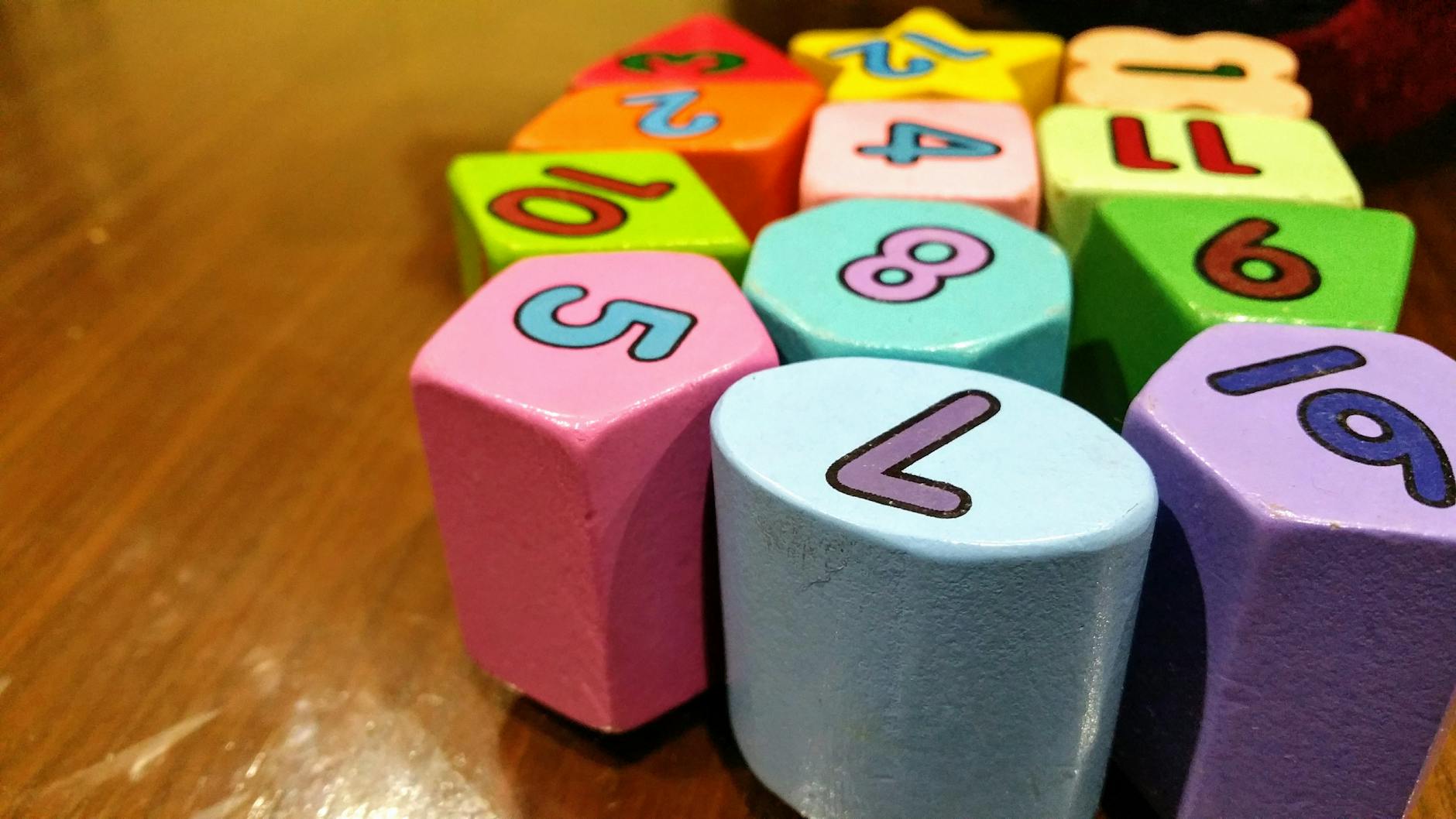
Math Games That Make Numbers Come Alive (Even for the Kid Who Hates Math)
My son cried at math worksheets for two years. Then we found games. Here are the ones that changed everything — no flashcards required.
 Curriculum
Living Books: What They Are and How to Find Them
Charlotte Mason's term for books that feel alive. Here's what makes a book 'living,' why it matters, and a list of the ones that have done the most for our homeschool.
 Curriculum
Teaching Writing at Home (When You Don't Feel Like a Writing Teacher)
Writing is the subject most homeschool parents fear most. Here's how we finally made it work — and the approach that produces the most growth for the least friction.